
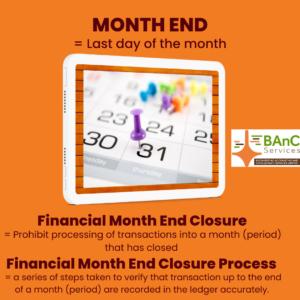
Month end, in general terms, means the last day of the calendar month.
In bookkeeping and accounting, month end brings with it the need to close the month/period, which usually happens a few days after the last day of the month.
What does closing the month do? It prohibits further processing of transactions into the month that has ended.
Pre-requisite to closing the month is ensuring all transactions for the year to the end of the month in question, have been processed completely and accurately.
Processing all transactions entails updating the ledger with all invoices (both sales and expenditure) and recording all expenses incurred during the month.
Assurance of accuracy of transactions in the ledger is obtained by performing reconciliations and having someone other than the person who prepared the reconciliations, check and sign them off.
Best practice is to maintain a month end checklist. This checklist acts as a reference point that confirms all the required processes have been completed; completion of which provides assurance of a completely up-to-date and accurate financial position to the end of the month in question.
On satisfaction that the records are complete and accurate, best practice is to lock the period i.e. prohibit recording of further transactions into the month completed and reconciled – this is known as month end closure.
An efficient month end process is key to accuracy of financial records and timeliness of management reports. Download our free resource – “3 Key Month End Tasks” to help you achieve both.
Contact BAnC Services if you require a review of your month end process.
#monthend #finances #financialmanagement