
Funding shortfalls happen, but they don’t have to spell disaster for your nonprofit!
Whether a major grant falls through, donations dip, or the cost of delivering your programmes suddenly skyrockets, many nonprofit and mission-led organisations are facing new financial challenges. The truth is, the money isn’t stretching as far as it used to. And when that happens, it’s not about panicking, it’s about pivoting.
In this blog, I’ll walk you through:
• How to recognise when you’re heading into a funding crisis
• What a smart budgeting response looks like
• And five practical steps you can take right now to protect your organisation and your mission
Recognising Early Signs of a Funding Crisis
First things first: funding crises don’t always announce themselves with flashing lights. Sometimes it’s a slow trickle:
• Funders delay decisions
• Donors pull back
• Projected income simply doesn’t materialise
Other times it’s a big blow:
• A major funder exits unexpectedly
• Government contracts are cut
• Economic shifts hit your organisation overnight
The earlier you recognise these patterns, the more options you’ll have to respond thoughtfully — not reactively.
Ask yourself:
• Are we seeing cashflow gaps month-to-month?
• Are we dipping into reserves more often than planned?
• Have our projected income targets changed or disappeared?
Being honest about where you stand financially is the first step to regaining control.
Denial is dangerous. Your budget should act like a warning system — not just a spreadsheet.
What Budgeting Through a Crisis Actually Means
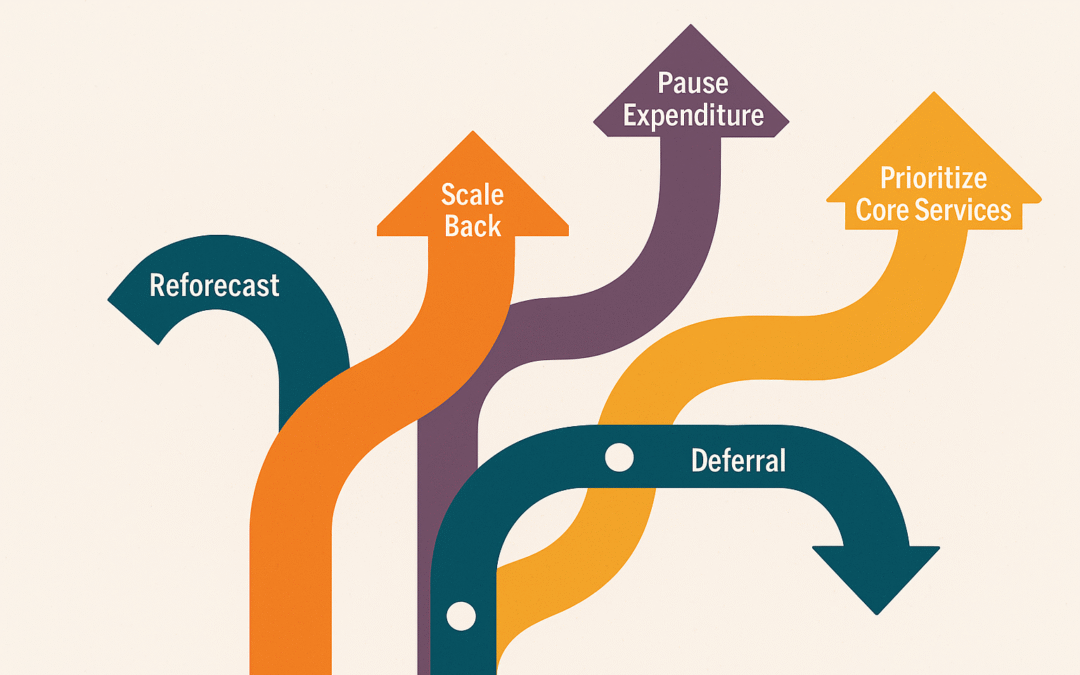
Budgeting through a crisis isn’t about “making it work somehow.” It’s about adapting your financial plan to match current reality, not the hopes and assumptions you started the year with. That might mean:
• Reforecasting your income
• Pausing or delaying planned expenditures
• Scaling back programmes temporarily
• Reprioritising core services
• Looking at reserves as a strategic buffer and not a last resort
Think of it like adjusting your sails when the wind changes.
It’s not failure. It’s good financial leadership.
5 Practical Steps to Budget Through a Funding Crisis
Here’s the five-step framework I use when supporting clients through tough financial seasons:
- Step 1: Reforecast Honestly
- Step 2: Prioritise Expenditures
- Step 3: Scenario Plan for Flexibility
- Step 4: Activate Contingency Plans
- Step 5: Communicate Transparently
Red Flags You Shouldn’t Ignore
If you notice any of the following, it’s time to act quickly:
• Consistently paying bills late
• Using restricted funds to cover general operating costs
• No updated cashflow forecast for the next 3–6 months
• Spending money without updated budget tracking
• Not informing the board or funders about financial changes
The sooner you act, the more options you have.
Building Back Stronger
Even in crisis, there’s an opportunity to strengthen your financial leadership.
Use this season to:
• Improve your forecasting practices
• Diversify your income streams (e.g., trading income, digital fundraising, major donor strategies)
• Build or review your reserves policy
• Deepen your board’s engagement with financial oversight
Budgeting through a crisis isn’t just about surviving. It’s about becoming more financially resilient, agile, and strategic for the future.
Final Thoughts
A funding crisis can feel overwhelming, especially when you’re juggling mission delivery, staff wellbeing, and tough financial realities.
But remember:
• You can take control by reforecasting and prioritising
• You do have choices, even if they’re difficult ones
• You don’t have to navigate this alone
A budget isn’t a promise. It’s a plan, and plans are meant to adapt.
🎁 Want a simple and more detailed, printable version of this framework?
👉 Download the 5-Step Crisis Budgeting Checklist here, a free resource to help you navigate financial uncertainty with clarity and confidence.
✨ Let’s Stay Connected
Got questions or need support? Get in touch – I’d love to hear from you.
Want more tips on charity finance and running a financially confident organisation?
📩 Subscribe to the newsletter for business and financial management updates
🎧 Listen to the podcast – The Nonprofit Bookkeeper is available wherever you tune in
📱 Follow on TikTok @npbbookkeeper for short, practical insights
📘 And if you’re looking for a jargon-free guide to the finance terms that matter –
grab your copy of Charity Finance from A to Z.