
You’ve just secured a brilliant project grant; amazing news!
But once the excitement dies down, reality sets in:
“This covers the workshops and materials… but what about the rent? The admin time? Our internet bill?”
f that sounds familiar, you’re not alone.
Many small charities and social enterprises are great at bringing in project money, but struggle to keep the lights on between grants. That’s where getting the balance between project costs and core costs really matters.
This blog post looks at how to get that balance right, in a way that actually works for your organisation.
So, what’s the difference?
To keep it simple:
Project costs are the things you need to deliver a specific piece of work, for example:
• Running a youth programme
• Delivering a community event
• Producing a research report
These costs are usually tied to a timeline, a funder, and a set of deliverables.
Core costs are everything that keeps your organisation ticking; whether or not you’re running a project:
• Admin staff
• Rent and bills
• Office supplies
• Insurance
• Finance and HR support
• Time spent planning or reporting
They’re the behind-the-scenes costs that make all your good work possible.
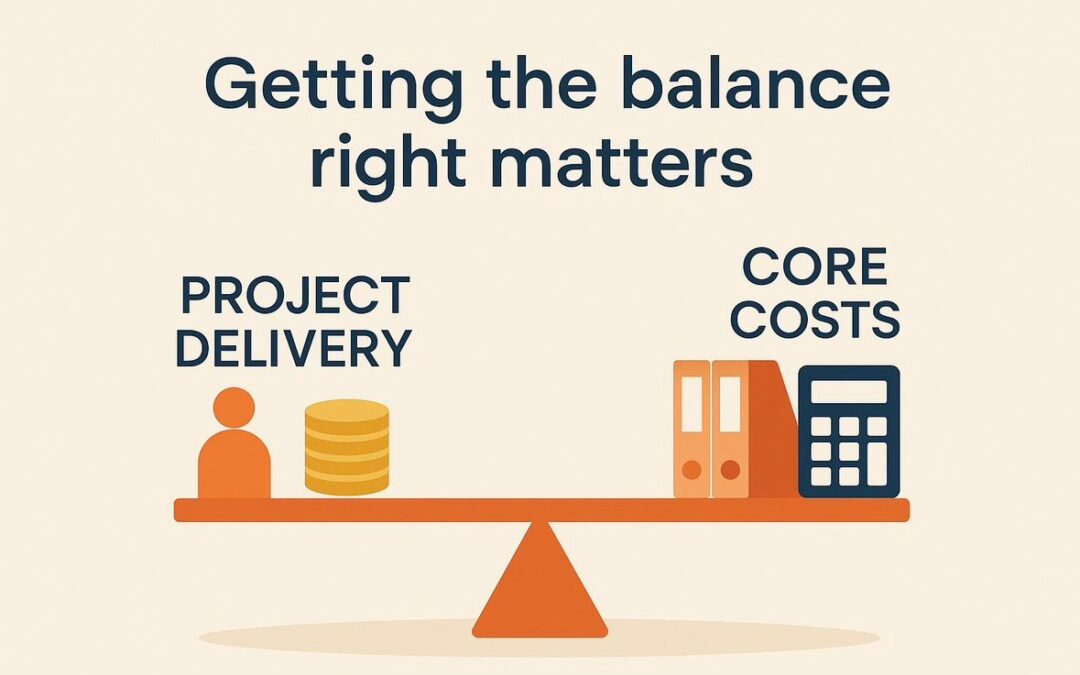
Why getting the balance matters
When most of your funding is project-based, it can feel like you’re always busy, but never quite secure.
Maybe this sounds familiar:
• You’re delivering brilliant programmes but struggling to cover staff salaries
• You’re constantly applying for new funding to stay afloat
• You can’t invest in proper systems or support because there’s no money for it
This isn’t just stressful; it’s unsustainable.
If you don’t build in enough to cover your core, you end up patching things together and hoping nothing breaks.
On the other hand however, focusing too much on covering core and not delivering project outcomes can make securing funding more difficult – because you’ll have less tangible impact to show.
The goal is healthy balance: making sure each project contributes to your core while still delivering real impact.
Can you include core costs in project budgets?
Yes you can; and in many cases, you should.
Some funders still want to keep things tightly project-focused. But many now understand that organisations can’t run on air.
Here’s how to include core costs in your project budgets without raising eyebrows:
Use full cost recovery
This means working out what proportion of your overheads should be covered by each project. If a project uses 40% of your team’s time, it should contribute 40% of your admin and office costs too.
Be honest and clear
Explain what each line in your budget supports. Don’t just call it “admin” – say it’s support with reporting, communication, finance, safeguarding, and so on.
Tell the story
Funders are people. Help them see why a contribution to your rent, systems, or management time helps you deliver the project well.
Other ways to help cover your core costs
Even with project funding, it helps to have income that gives you more flexibility. That might include:
- Unrestricted donations
- Small membership fees
- Paid training or consultancy
- Trading or product income
- Core funding from trusts or individual donor
Having even a small amount of regular, unrestricted income can give you the breathing space to plan ahead instead of constantly chasing your tail.
Don’t be afraid to talk to your funders
If you’re not sure whether a funder allows core costs — ask.
You could say:
“Would you be open to a proportion of core costs being included in the budget?”
“This project will rely on existing admin and systems, so can we build in a fair share of those costs?”
Some will say no. But some will say yes; and those yeses can make all the difference.
Final thoughts
Projects are important — they’re how we reach people, deliver impact, and show results.
But your organisation can’t run on project money alone. Core costs are the foundation that everything else rests on. Without them, even the best projects can collapse under the weight of admin and burnout.
So when you plan your next budget, don’t just think about delivery — think about sustainability. Think about what it really takes to keep doing what you do, well.
- In other words, good budgeting isn’t just about adding up numbers. It’s about building a stable base so your organisation can grow, adapt, and deliver well, and not just survive.
________________________________________
About Me
Hi, I’m Aishat — founder of BAnC Services, where we help small charities and social enterprises make sense of their numbers, build stronger finance systems, and plan for sustainability (not just survival).
If you need support with budgeting, funding applications, or reviewing your costs — we’re here for that.
👉🏾 Find out more about working with us
📩 Or Get in touch to see how we can support your team.
Want more tips on charity finance and running a financially confident organisation?
📩 Subscribe to the newsletter for business and financial management updates
🎧 Listen to the podcast – The Nonprofit Bookkeeper is available wherever you tune in
📘 And if you’re looking for a jargon-free guide to the finance terms that matter –
grab your copy of Charity Finance from A to Z.